Dear Santa, Don’t Believe That Silly Elf — Christmas
First Impression: Playful, Witty, and Instantly Relatable
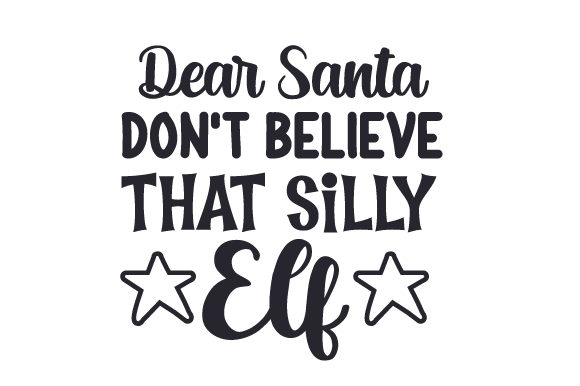
Opening the Dear Santa, Don’t Believe That Silly Elf graphic design asset feels like unboxing a well-crafted holiday inside joke — warm, clever, and just irreverent enough to stand out in a sea of traditional red-and-green cheer. It lands with a wink, not a shout: a lighthearted twist on Christmas nostalgia that avoids cliché while still feeling deeply seasonal. For brand owners and content creators, this tone is gold — it signals approachability without sacrificing polish, humor without undermining professionalism.
A Real-World Use Case: Refreshing a Small Business Holiday Campaign
Last December, I helped a small-batch candle brand launch its “Naughty & Nice” limited-edition collection. We needed marketing visuals that felt handmade yet cohesive, festive but not childish — and crucially, assets that could scale across Instagram carousels, Pinterest pins, email headers, and printable gift tags. Dear Santa, Don’t Believe That Silly Elf became our secret weapon for campaign headers and social media graphics. Its expressive charm elevated product shots without overwhelming them, and its clean vector-based structure (available as SVG and PNG) made resizing effortless — whether cropped for a 1080x1080 Instagram post or stretched across a 3000px website banner.
Where It Shines: Brand Consistency Meets Creative Flexibility
This creative design works exceptionally well in contexts where personality matters most. As part of a broader brand identity system, Dear Santa, Don’t Believe That Silly Elf supports stronger first impressions and more memorable campaign visuals — especially when paired with confident typography and intentional negative space. It enhances visual hierarchy in blog graphics and editorial layouts, adds warmth to digital ads and email banners, and brings character to packaging accents and merchandise like stickers or tote bags. Bloggers and online coaches use it in Canva templates for holiday lead magnets; small business branding teams drop it into branded content bundles for seasonal social calendars.
Top 5 High-Impact Applications
- Social media covers and story highlights — adds instant thematic cohesion to holiday campaigns
- Pinterest pins and blog headers — drives engagement through playful contrast against minimalist backgrounds
- Printable promotions and event flyers — scales beautifully for DIY printouts or professional press runs
- Digital product visuals — elevates holiday-themed Canva templates, planners, and activity kits
- Branded packaging inserts — lends whimsy to unboxing experiences without compromising premium perception
Where to Proceed With Intentional Design Choices
Like any strong graphic design asset, Dear Santa, Don’t Believe That Silly Elf thrives when used purposefully — not universally. Avoid placing it directly into formal corporate branding systems, dense information layouts, or low-contrast backgrounds where legibility suffers. It’s less effective in text-heavy Facebook ads or tiny mobile thumbnails where its expressive details blur. Also, brands rooted in ultra-minimalist or monochrome aesthetics may find it visually competitive unless carefully edited or simplified — think grayscale conversion or selective cropping.
Brand Designer Notes: Testing Before Launch
Before committing to Dear Santa, Don’t Believe That Silly Elf in live campaigns, run these practical checks:
- Test it against your brand color palette — does it harmonize with primary and accent hues, or does it clash?
- Render it in black and white — does the illustration retain clarity and charm without color cues?
- Place it inside real campaign mockups — website headers, Instagram feed previews, email client renders — to assess balance and scale.
- Preview on mobile screens at 50% size — verify readability and emotional impact at smaller dimensions.
- Compare it side-by-side with competitor visuals — does it differentiate your brand voice, or fade into sameness?
- Pair it with serif, sans serif, script, handwritten, and display fonts — observe how spacing, weight, and rhythm shift.
- Review licensing — confirm commercial license coverage before using in paid ads, client deliverables, or digital product bundles.
Why This Asset Builds Audience Trust — Not Just Attention
In today’s saturated content landscape, attention is cheap — but trust is earned. Dear Santa, Don’t Believe That Silly Elf contributes to audience trust by signaling authenticity and creative confidence. It tells viewers: *We understand the season, we respect your intelligence, and we’re not afraid to be human.* That resonance translates directly to higher engagement rates, stronger recognition across platforms, and deeper emotional connection — especially among audiences aged 25–45 who value wit over whimsy and substance over sparkle.
Final Verdict: A Strategic, Not Just Seasonal, Design Asset
Dear Santa, Don’t Believe That Silly Elf isn’t just another clipart download — it’s a thoughtfully crafted digital product designed for real marketing workflows. Whether you're building a holiday content kit, refreshing your visual library for a creative marketplace shop, or preparing a small business branding refresh, this illustration delivers modern design sensibility with commercial-grade versatility. It supports professional branding goals without demanding perfectionist execution — making it ideal for solopreneurs, digital sellers, and time-strapped creative entrepreneurs alike.
Bottom-Line Recommendation for Content Creators
If your goal is to create Christmas marketing visuals that feel joyful, intelligent, and unmistakably *yours*, Dear Santa, Don’t Believe That Silly Elf earns a spot in your core design assets. Use it boldly in hero graphics and campaign headers. Adapt it thoughtfully for packaging and digital ads. And always — test, refine, and align it with your brand’s voice before going live. Because great visual storytelling doesn’t happen by accident. It happens when smart design meets intentional strategy.