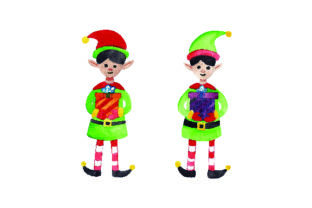
Elves Holding Presents — Watercolor Christmas
First Impression: Warm, Whimsical, and Instantly Recognizable
When I opened Elves Holding Presents - Watercolor, my first thought wasn’t “cute holiday clipart”—it was “this feels like a brand moment.” The soft granulation of the watercolor texture, the gentle lift of the elves’ expressions, and the subtle glow around the wrapped presents create an immediate emotional tone: joyful but grounded, festive but not frantic. It reads as handmade, heartfelt, and quietly confident—ideal for small business branding, lifestyle content, or premium seasonal offers. Unlike over-saturated digital illustrations, this graphic design asset breathes. That matters when you’re building audience trust through visual consistency.
A Real Campaign in Action: Launching a Holiday Content Kit
Last month, I helped a boutique online coaching business refresh their December campaign—launching a printable holiday planner bundle with guided reflection prompts, gift-checklists, and cozy ritual ideas. We needed marketing visuals that felt cohesive across Instagram posts, Pinterest pins, email banners, and a Canva template library. Elves Holding Presents - Watercolor became our unifying decorative element: scaled down as corner accents on blog graphics, layered softly behind bold sans serif headlines in Facebook ads, and centered elegantly on the cover of their lead magnet PDF. It didn’t shout—it anchored. And because it’s delivered as both PNG and SVG, we retained crispness at every size without losing the organic texture that makes it feel human-made.
Where This Graphic Design Asset Strengthens Brand Communication
- Brand identity: Works beautifully as a secondary motif alongside a clean wordmark—adds warmth without compromising professionalism.
- Packaging design & product labels: Perfect for artisanal goods (soaps, candles, teas) where tactile authenticity matters more than corporate polish.
- Social media graphics: Stands out in crowded feeds—not too literal, not too abstract—strikes the sweet spot between festive and focused.
- Digital ads & web design: When placed with ample negative space and paired with high-contrast typography, it lifts engagement without sacrificing clarity.
- Editorial design & content marketing: Adds narrative charm to newsletters, blog headers, and downloadable resources—especially effective for storytelling-driven brands.
- Printable design & merchandise: Holds up beautifully on greeting cards, sticker sheets, and tote bags thanks to its balanced composition and intentional white space.
Marketing Goals This Asset Helps Achieve—Without Extra Work
Elves Holding Presents - Watercolor supports stronger first impressions by offering instant seasonal resonance while avoiding cliché. Its loose yet intentional brushwork implies craftsmanship—boosting perceived value for handmade or small-batch products. Because it’s light on detail but rich in mood, it reinforces visual hierarchy: your headline or CTA stays dominant, while the illustration adds emotional context. For creative entrepreneurs building a recognizable aesthetic, it delivers consistent branding across touchpoints—from Instagram story highlights to email signature badges. And yes, it builds audience trust: people respond to authenticity, and watercolor conveys care, intention, and approachability far better than generic vector snowflakes ever could.
Best Places to Deploy This Creative Design
Use Elves Holding Presents - Watercolor where atmosphere matters most: hero graphics for holiday landing pages, campaign headers in email sequences, branded templates for client-facing materials, social media covers that reflect seasonal energy without screaming “SALE!”, packaging accents that whisper “thoughtfully made,” and decorative elements inside content bundles or media kits. It shines brightest when treated as a supporting actor—not the lead—but one with undeniable presence.
Where to Proceed With Intention
This isn’t a one-size-fits-all SVG design. Avoid using it in formal corporate branding, dense infographics, or text-heavy Facebook carousel ads where legibility trumps charm. Don’t scale it tiny on mobile banners—it loses its expressive nuance. Steer clear if your brand leans into stark minimalism or monochrome palettes unless you’ve tested how the watercolor texture interacts with those constraints. And never assume it’ll auto-fit your existing color system—always test it against your primary and secondary brand colors before finalizing layouts.
Practical Brand Designer Notes You’ll Actually Use
- Test Elves Holding Presents - Watercolor against your full brand color palette—not just your primary hue—to see which combinations evoke warmth vs. muddiness.
- Check black-and-white usage: does the illustration retain enough contrast and shape definition when desaturated? Crucial for printables and accessibility.
- Drop it into real campaign mockups—not just isolated previews—to assess balance, spacing, and emotional weight in context.
- Preview on mobile screens at 50% size: does the gesture of the elves still read? Do the presents retain visual weight?
- Compare side-by-side with top competitor visuals—does it differentiate your brand or blend in?
- Pair it with serif, sans serif, script, handwritten, and display fonts to gauge typographic harmony—watercolor often sings with soft serifs or airy sans fonts.
- Confirm commercial licensing before using in paid campaigns, client deliverables, or any digital product sold on marketplaces like Etsy or Creative Market.
Final Thought: A Strategic Asset, Not Just Seasonal Decor
Elves Holding Presents - Watercolor is more than festive clipart—it’s a thoughtful, versatile piece of commercial design built for creators who understand that emotion drives action. Whether you're a blogger curating a cozy Christmas editorial series, a small business owner designing limited-edition packaging, or a digital seller assembling a Canva template bundle, this illustration earns its place in your design assets library. It doesn’t distract. It connects. And in today’s oversaturated visual landscape, that kind of quiet impact is rare—and invaluable.